Delving into the realm of selecting critical illness cover for the future, this introduction sets the stage for an informative journey filled with insights and practical advice.
The following paragraph will dive deeper into the nuances of this crucial topic.
Understanding Critical Illness Cover
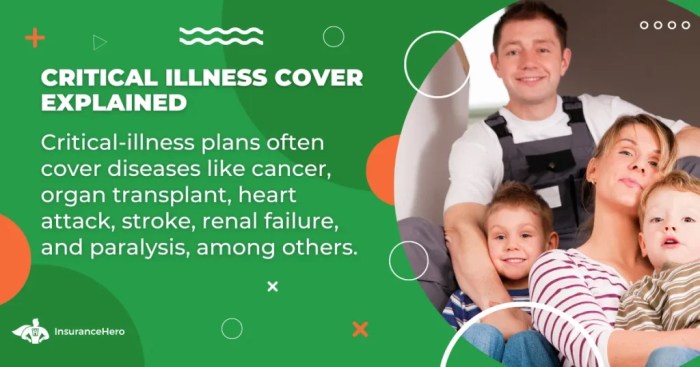
Critical illness cover is a type of insurance policy that provides a lump sum payment if the policyholder is diagnosed with a serious illness that is listed in the policy. This payment can help cover medical expenses, loss of income, or any other financial obligations that may arise due to the illness.
It is important to have critical illness cover as it offers financial protection in case of a severe health issue. The lump sum payment can help alleviate the financial burden that comes with costly medical treatments and allow the policyholder to focus on recovery without worrying about the financial aspect.
Common Critical Illnesses Covered
- Cancer
- Heart attack
- Stroke
- Organ transplant
- Paralysis
Factors to Consider When Choosing Critical Illness Cover
It is crucial to carefully assess individual needs before selecting a critical illness cover policy. This involves considering factors such as your current health condition, family medical history, lifestyle, and financial obligations.Coverage amount and policy duration are two key aspects to evaluate when choosing a critical illness cover.
The coverage amount should be sufficient to cover medical expenses, loss of income, and other financial responsibilities in case of a critical illness diagnosis. The policy duration should align with your long-term financial goals and provide coverage for an adequate period.When comparing different insurers offering critical illness cover, it is essential to consider factors such as premium costs, coverage options, claim settlement ratio, customer reviews, and reputation in the market.
It is advisable to choose a reputable insurer with a high claim settlement ratio and a good track record of customer service.Optional add-ons can enhance the coverage of a critical illness policy by providing additional benefits or coverage for specific illnesses or conditions.
Examples of optional add-ons include critical illness riders, hospital cash benefit, waiver of premium, and accidental death benefit. These add-ons can provide comprehensive coverage tailored to your individual needs and preferences.
Evaluating Policy Features
When choosing the right critical illness cover, it’s crucial to evaluate the policy features to ensure it meets your needs. This involves analyzing various aspects such as waiting periods, pre-existing conditions, and renewal terms.
Waiting Period
- Some critical illness policies have a waiting period before you can make a claim. This period can range from 30 days to a few months.
- It’s essential to understand the waiting period of the policy you are considering to know when you can start receiving benefits.
- Shorter waiting periods may be more favorable, especially if you require immediate coverage for critical illnesses.
Pre-existing Conditions Impact
- Pre-existing conditions refer to any health issues you had before purchasing the critical illness cover.
- Some policies may exclude coverage for pre-existing conditions, while others may cover them after a waiting period or at higher premiums.
- It’s important to carefully review how pre-existing conditions are handled in the policy to avoid any surprises during a claim.
Renewal Terms and Conditions
- Understand the renewal terms of the critical illness policy to ensure continuous coverage.
- Review if the policy offers guaranteed renewability, meaning the insurer cannot refuse to renew your coverage as long as you pay premiums.
- Check for any changes in premiums or coverage that may occur upon renewal and assess if the policy still meets your needs.
Cost Considerations
When it comes to choosing the right critical illness cover, cost is a significant factor to consider. Understanding the factors that influence the cost of critical illness cover can help you make an informed decision about the type of policy that best suits your needs and budget.
Factors Influencing Cost
- Age: Younger individuals typically pay lower premiums for critical illness cover compared to older individuals.
- Health Status: Your current health condition and medical history can impact the cost of the policy.
- Coverage Amount: The higher the coverage amount, the higher the premium you may have to pay.
- Policy Term: Longer policy terms may result in higher premiums.
Tips for Finding Affordable Coverage
- Compare Quotes: Shop around and compare quotes from different insurance providers to find the most competitive rates.
- Consider Add-ons Carefully: Evaluate whether add-ons are necessary for your specific needs to avoid unnecessary costs.
- Healthy Lifestyle: Maintaining a healthy lifestyle can help reduce the risk of certain illnesses and lower your premium.
Pros and Cons of Premium Levels
- Higher Premium:Pros – Comprehensive coverage, higher payout amounts. Cons – More expensive, may not be affordable for everyone.
- Lower Premium:Pros – More affordable, easier to budget for. Cons – Limited coverage, lower payout amounts.
Final Wrap-Up
Concluding our exploration of choosing the right critical illness cover for 2025, this summary encapsulates key points discussed and leaves readers with a newfound understanding of their insurance needs.
Key Questions Answered
What factors should I consider when choosing critical illness cover?
Consider your individual needs, coverage amount, and policy duration before making a decision.
How can I find affordable yet comprehensive critical illness coverage?
Research different insurers and compare costs to find the best option that fits your budget.
What is the impact of pre-existing conditions on critical illness coverage?
Pre-existing conditions may affect coverage options and premiums, so it’s essential to disclose this information.