Beginning with Health Information Technology: Integrating AI for Faster Medical Diagnosis, the narrative unfolds in a compelling and distinctive manner, drawing readers into a story that promises to be both engaging and uniquely memorable.
As we delve into the realm of Health Information Technology and the integration of Artificial Intelligence for quicker medical diagnoses, an exciting journey awaits to explore the intersection of technology and healthcare.
Introduction to Health Information Technology
Health Information Technology (HIT) refers to the use of technology to manage healthcare information, with a focus on improving the quality and efficiency of healthcare delivery. In the context of medical diagnostics, HIT plays a crucial role in streamlining the process of diagnosis, treatment, and monitoring of patients. By integrating AI algorithms and machine learning into HIT systems, healthcare providers can achieve faster and more accurate medical diagnoses, ultimately leading to better patient outcomes.
Role of HIT in Transforming Healthcare Delivery
- HIT enhances communication and coordination among healthcare providers, leading to more efficient and collaborative care.
- Electronic Health Records (EHRs) centralize patient information, allowing for easier access and sharing of data across different healthcare settings.
- Telehealth services enabled by HIT increase access to care for patients in remote or underserved areas.
Examples of AI Applications in Medical Diagnosis through HIT
- AI-powered imaging analysis tools assist radiologists in detecting abnormalities in medical images such as X-rays, MRIs, and CT scans.
- Natural Language Processing (NLP) algorithms help extract valuable information from unstructured clinical notes, facilitating data analysis and decision-making.
- Machine learning algorithms can predict patient outcomes and recommend personalized treatment plans based on historical data and patterns.
Benefits of Integrating AI in Medical Diagnosis
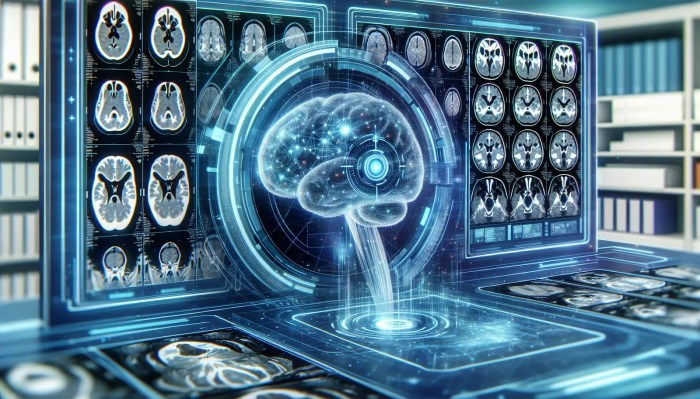
AI technology offers numerous advantages when integrated into medical diagnosis processes. By leveraging AI algorithms and machine learning capabilities, healthcare professionals can experience enhanced speed, accuracy, and efficiency in diagnosing various medical conditions.
AI can significantly improve the speed of medical diagnosis by quickly analyzing vast amounts of patient data, including medical history, symptoms, and test results. This rapid analysis can lead to faster identification of potential health issues, allowing for prompt treatment and intervention.
Furthermore, AI can assist healthcare professionals in making better decisions by providing valuable insights and recommendations based on the analyzed data. This can help doctors formulate more precise diagnoses and treatment plans, ultimately improving patient outcomes and reducing the risk of errors.
In addition to speed and accuracy, integrating AI in medical diagnostics can also bring potential cost-saving benefits. By streamlining the diagnostic process and minimizing unnecessary tests or procedures, AI can help reduce healthcare costs for both patients and providers. This cost efficiency can lead to improved accessibility to quality healthcare services and better resource allocation within the healthcare system.
Challenges and Limitations of AI in Medical Diagnosis
AI technology has shown immense potential in revolutionizing medical diagnosis, but it also comes with its set of challenges and limitations. From technical barriers to ethical concerns, the integration of AI in healthcare is not without its hurdles.
Challenges in Implementing AI for Medical Diagnosis
- Data Quality: AI algorithms heavily rely on vast amounts of high-quality data for accurate predictions. Inconsistent or biased data can lead to incorrect diagnoses.
- Interoperability: Integrating AI systems with existing healthcare infrastructure and electronic health records can be a complex task, requiring seamless connectivity and compatibility.
- Regulatory Hurdles: The regulations surrounding AI in healthcare are still evolving, posing challenges in ensuring compliance and patient safety.
Ethical Considerations in AI Healthcare
- Privacy Concerns: The use of patient data to train AI models raises privacy issues and the need for secure data handling practices.
- Transparency: AI algorithms can sometimes act as “black boxes,” making it difficult to understand the reasoning behind diagnostic decisions, leading to concerns about accountability and trust.
- Bias and Fairness: AI systems can inherit biases from the data they are trained on, potentially leading to discriminatory outcomes in healthcare decision-making.
Limitations of AI Technology in Medical Diagnostics
- Lack of Contextual Understanding: AI may struggle to capture the full context of a patient’s medical history, symptoms, and unique circumstances, leading to misinterpretations.
- Uncertainty in Uncommon Cases: AI models are often trained on common scenarios, making them less reliable in diagnosing rare or unusual medical conditions.
- Human Oversight: Despite advancements, AI cannot replace the critical thinking and expertise of healthcare professionals, requiring human oversight to ensure accurate and ethical diagnoses.
Integrating AI in Health Information Technology Systems
AI algorithms are integrated into existing Health Information Technology (HIT) systems through a process called machine learning. This involves training the AI algorithms with large datasets of medical information to enable them to recognize patterns and make accurate predictions for medical diagnosis.
Importance of Data Security and Privacy
Data security and privacy are paramount when using AI for medical diagnosis. Healthcare organizations must ensure that patient data is protected from unauthorized access, breaches, or misuse. Implementing robust encryption measures, access controls, and regular security audits are essential to maintain the confidentiality and integrity of patient information.
Examples of Successful Integration of AI in Healthcare Organizations
- IBM Watson: IBM Watson for Oncology is a prime example of successful integration of AI in healthcare for faster medical diagnosis. It analyzes patient data and medical literature to provide oncologists with treatment options based on the latest research and best practices.
- GE Healthcare: GE Healthcare’s AI-powered imaging solutions help radiologists in interpreting medical images more efficiently and accurately. These systems use AI algorithms to detect abnormalities and assist in diagnosing conditions such as cancer, fractures, and other diseases.
- Google DeepMind: Google DeepMind has developed AI algorithms that can analyze complex medical data and assist clinicians in diagnosing conditions such as eye diseases and kidney injuries. These systems have shown promising results in improving diagnostic accuracy and speeding up the decision-making process.
Future Trends in Health Information Technology and AI
AI technology is expected to continue evolving rapidly in the field of medical diagnostics, with advancements in machine learning algorithms and deep learning models. These developments will enable AI systems to analyze complex medical data more accurately and efficiently, leading to faster and more precise diagnoses.
Potential Impact of AI Advancements on Patient Care and Outcomes
- Improved Accuracy: AI-powered diagnostic tools can help healthcare providers make more accurate and timely diagnoses, reducing errors and improving patient outcomes.
- Personalized Treatment: AI algorithms can analyze large volumes of patient data to identify individualized treatment plans based on specific genetic, lifestyle, and environmental factors.
- Efficient Healthcare Delivery: AI technology can streamline administrative tasks, optimize hospital operations, and enhance patient care coordination, leading to better overall healthcare delivery.
Emerging Technologies Enhancing AI Capabilities in Healthcare
- Blockchain Technology: Blockchain can enhance data security and interoperability in healthcare, ensuring the integrity and confidentiality of patient information used by AI systems.
- Internet of Medical Things (IoMT): IoMT devices can collect real-time patient data, which AI algorithms can analyze to provide proactive and personalized healthcare interventions.
- Virtual Reality (VR) and Augmented Reality (AR): VR and AR technologies can be integrated with AI systems to offer immersive training simulations for healthcare professionals and improve patient education and engagement.
Summary
In conclusion, the integration of AI in Health Information Technology signifies a remarkable leap forward in medical diagnostics, paving the way for faster, more accurate diagnoses that can ultimately improve patient outcomes and revolutionize healthcare delivery as we know it.
User Queries
What are some common challenges faced in implementing AI for medical diagnosis?
Some challenges include data privacy concerns, ethical considerations, and the need for extensive training of healthcare professionals to effectively utilize AI technologies.
How can AI technology enhance the speed and accuracy of medical diagnosis?
AI algorithms can analyze vast amounts of medical data quickly and efficiently, leading to faster diagnosis and improved accuracy in identifying health conditions.
What is the potential impact of AI advancements on patient care and outcomes?
AI advancements have the potential to personalize patient care, improve treatment effectiveness, and enhance overall healthcare outcomes through more precise diagnostics and tailored interventions.