Exploring the latest trends in Health Information Technology for modern hospital management, this introduction delves into the crucial role technology plays in shaping healthcare practices today. From improving patient care to enhancing operational efficiency, these trends are revolutionizing the way hospitals operate.
As we navigate through the impact of telehealth, artificial intelligence, data security, and electronic health records, it becomes evident how these advancements are reshaping the healthcare landscape.
Overview of Health Information Technology Trends
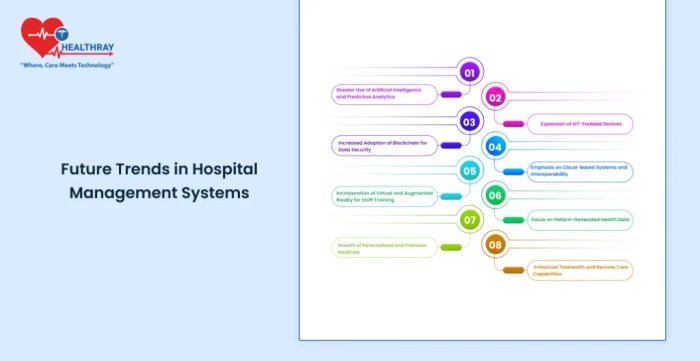
In modern hospital management, Health Information Technology (HIT) plays a crucial role in transforming the way healthcare is delivered. Advancements in technology have revolutionized the healthcare industry, leading to improved patient care and operational efficiency.
Advancements in Telemedicine
Telemedicine is a key trend in HIT that allows healthcare providers to deliver remote care to patients through the use of technology such as video conferencing and mobile apps. This has increased access to healthcare services, especially in rural areas, and has improved patient outcomes by enabling timely consultations and monitoring.
Integration of Electronic Health Records
The integration of Electronic Health Records (EHR) has streamlined the management of patient information, allowing healthcare providers to access and share data easily. This has led to better coordination of care, reduced errors, and improved patient safety.
Artificial Intelligence in Healthcare
Artificial Intelligence (AI) is being increasingly used in healthcare for tasks such as diagnosis, treatment planning, and personalized medicine. AI algorithms can analyze large amounts of data to provide insights that help healthcare providers make more informed decisions, leading to better patient outcomes.
Telehealth and Remote Monitoring
Telehealth and remote monitoring have revolutionized hospital management by allowing healthcare providers to deliver care to patients remotely. This has significantly impacted the way hospitals operate and how patients are treated.
Impact of Telehealth on Hospital Management
Telehealth has enabled hospitals to reach a larger patient population, provide care more efficiently, and reduce unnecessary hospital visits. By offering virtual consultations and monitoring services, hospitals can streamline their operations and improve patient outcomes.
Remote Monitoring Systems
Remote monitoring systems have transformed the way patients are cared for by allowing healthcare providers to track vital signs, medication adherence, and disease progression from a distance. This real-time data allows for early intervention, personalized treatment plans, and improved patient engagement.
Benefits and Challenges of Implementing Telehealth Services
- Benefits:
- Increased access to healthcare for remote or underserved populations.
- Improved patient outcomes through continuous monitoring and early intervention.
- Cost savings for patients and healthcare providers by reducing hospital visits.
- Challenges:
- Ensuring data security and patient privacy in remote monitoring systems.
- Integration with existing electronic health record systems for seamless care coordination.
- Reimbursement policies and regulations that vary by region or insurance provider.
Artificial Intelligence and Machine Learning
Artificial Intelligence (AI) and Machine Learning (ML) technologies are transforming hospital management by streamlining processes, improving patient care, and enhancing operational efficiency. These cutting-edge technologies are revolutionizing the healthcare industry, paving the way for more personalized and effective patient treatment.
AI Applications in Health Information Systems
AI is being utilized in various ways within health information systems to optimize decision-making processes and improve patient outcomes. Some examples of AI applications in healthcare include:
- Medical Imaging Analysis: AI algorithms can analyze medical images such as X-rays, MRIs, and CT scans to detect abnormalities and assist radiologists in making accurate diagnoses.
- Predictive Analytics: Machine learning models can analyze patient data to predict disease progression, identify at-risk patients, and recommend personalized treatment plans.
- Natural Language Processing: AI-powered chatbots and virtual assistants can interact with patients, answer their queries, schedule appointments, and provide health-related information.
- Drug Discovery: AI algorithms can analyze vast amounts of data to identify potential drug candidates, accelerate the drug discovery process, and develop personalized medications.
Future Developments of AI in Healthcare
The future of AI in healthcare holds immense potential for further advancements and innovations. Some potential developments include:
- Enhanced Diagnostics: AI algorithms will continue to improve diagnostic accuracy by analyzing complex data sets and identifying patterns that are not easily recognizable by human clinicians.
- Precision Medicine: AI will play a crucial role in developing personalized treatment plans based on individual genetic makeup, lifestyle factors, and medical history.
- Remote Patient Monitoring: AI-powered devices and wearables will enable real-time monitoring of patients’ health status, allowing for early intervention and proactive healthcare management.
- Healthcare Operations Optimization: AI and ML technologies will optimize hospital operations by predicting patient admissions, scheduling surgeries, and managing resources efficiently.
Data Security and Privacy in Health IT
Data security is a critical aspect of managing health information within modern hospital management systems. Ensuring the privacy and protection of patient data is paramount to maintaining trust and compliance with regulations.
Importance of Data Security in Health IT
- Data breaches in healthcare can lead to serious consequences, including identity theft, financial fraud, and compromised patient care.
- Protecting sensitive health information is essential for maintaining patient confidentiality and trust in the healthcare system.
- Compliance with data security regulations helps healthcare organizations avoid costly fines and legal repercussions.
Challenges and Solutions for Ensuring Privacy in Health IT Systems
- Key challenges include the growing complexity of IT systems, evolving cyber threats, and the need to balance data accessibility with security measures.
- Solutions involve implementing robust encryption protocols, access controls, regular security audits, and staff training on best practices for data protection.
- Collaboration with cybersecurity experts and investing in cutting-edge security technologies can help address emerging threats and vulnerabilities.
Role of Compliance Regulations such as HIPAA
- HIPAA (Health Insurance Portability and Accountability Act) sets standards for protecting sensitive patient data and requires healthcare organizations to implement safeguards to ensure data security and privacy.
- Compliance with HIPAA regulations includes conducting risk assessments, implementing data encryption, and maintaining audit trails to track data access and modifications.
- Non-compliance with HIPAA can result in severe penalties, loss of reputation, and legal consequences for healthcare providers and organizations.
Electronic Health Records (EHR) Systems
Electronic Health Records (EHR) systems have revolutionized modern hospital management by digitizing and centralizing patient information. These systems offer a wide range of benefits that significantly improve the efficiency and quality of patient care.
Benefits of EHR Systems
- Improved Accessibility: EHR systems allow healthcare providers to access patient records quickly and securely, regardless of their location. This instant access to information can lead to faster and more informed decision-making.
- Enhanced Coordination: By centralizing patient data, EHR systems promote better coordination among healthcare teams. This streamlines communication and ensures that all providers have access to the most up-to-date information.
- Increased Efficiency: EHR systems automate various tasks, such as appointment scheduling, prescription refills, and billing. This automation reduces administrative burden, allowing healthcare providers to focus more on patient care.
- Better Clinical Outcomes: With EHR systems, healthcare providers can easily track patient progress, monitor treatment plans, and identify potential issues. This leads to improved clinical outcomes and patient satisfaction.
Integration of EHR Systems with Other Health IT Platforms
- Interoperability: EHR systems can be integrated with other health IT platforms, such as telehealth systems and remote monitoring devices, to create a seamless healthcare ecosystem. This interoperability ensures that patient data is shared securely and efficiently across different systems.
- Data Analytics: By integrating EHR systems with data analytics tools, healthcare providers can gain valuable insights into patient populations, treatment outcomes, and operational efficiency. This data-driven approach helps in making informed decisions and improving overall healthcare quality.
- Mobility: EHR systems are increasingly being designed with mobile capabilities, allowing healthcare providers to access patient records on-the-go. This mobility enhances flexibility and convenience, enabling better patient care delivery.
Closure
In conclusion, the dynamic nature of Health Information Technology trends underscores the importance of staying informed and adapting to technological innovations in hospital management. Embracing these trends can lead to enhanced patient outcomes, streamlined workflows, and ultimately, a more efficient healthcare system.
Questions and Answers
How can telehealth impact hospital management?
Telehealth can improve access to care, allow for remote monitoring of patients, and reduce the burden on healthcare facilities by enabling virtual consultations.
What are some examples of AI applications in health information systems?
AI is used for predictive analytics, personalized medicine, image analysis, and improving operational efficiencies in hospitals.
Why is data security crucial in managing health information?
Data security is essential to protect patient confidentiality, prevent data breaches, and maintain the integrity of healthcare records.
What are the benefits of EHR systems in hospital management?
EHR systems streamline record-keeping, improve communication among healthcare providers, and enhance the overall quality of patient care.